Asset Repair Management System With Spare Part Allocation and Tracking System - by Jays Pyrotechnics
Pitbackend is the REST API for the PIT Equipment Repair & Tracking System - a full-stack application that replaces paper-based repair logs with a strict, relational digital workflow. It serves the pitfrontend React dashboard. The system manages the complete repair lifecycle for production equipment: intake, fault logging, diagnosis, spare parts tracking, and resolution - across four user roles with tightly scoped access.
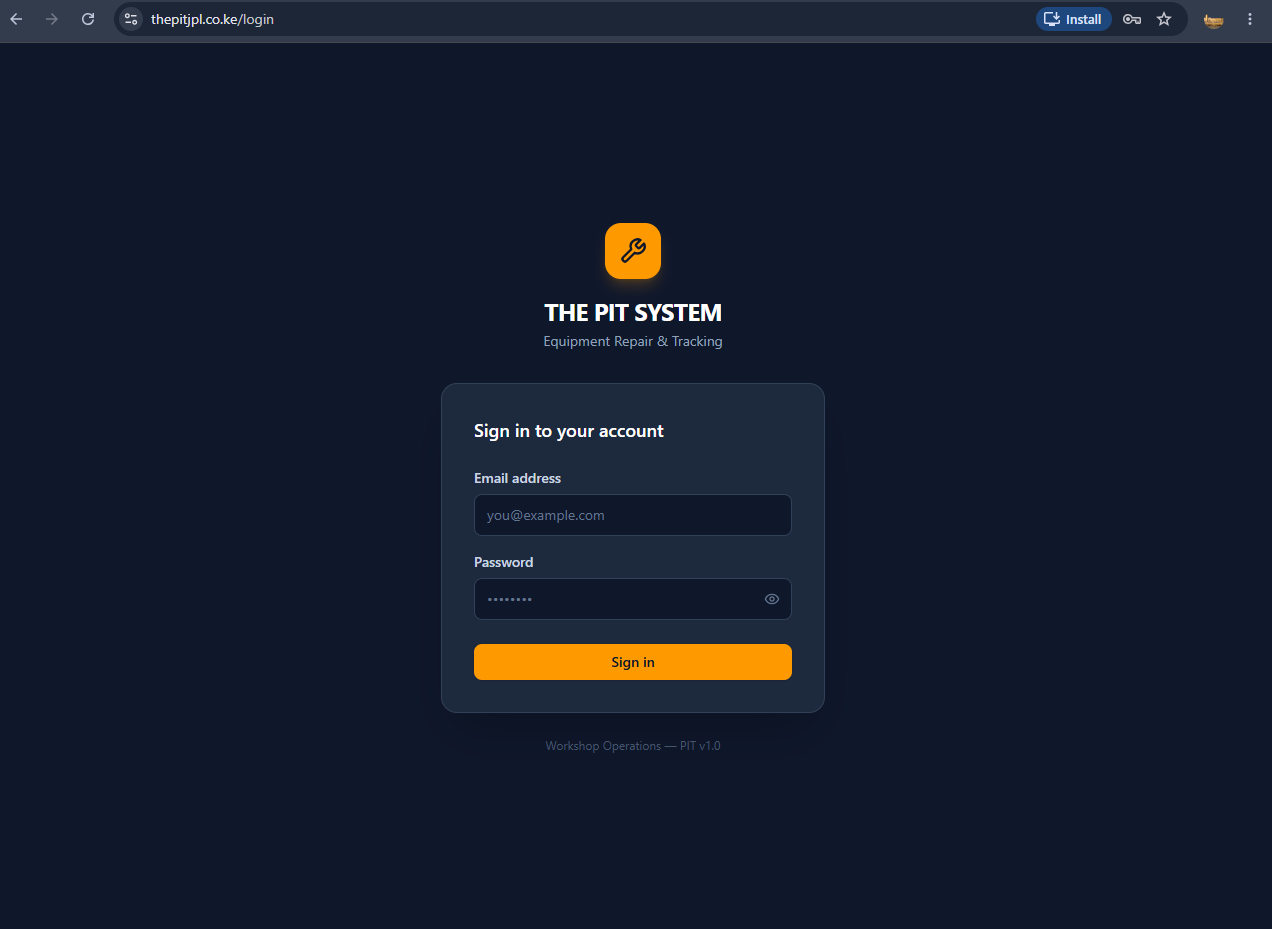
Sign In
Engineered for reliability and efficiency, THE PIT SYSTEM was built to streamline workshop operations and simplify equipment repair and tracking. Every authentication protocol, interface element, and background process is designed to ensure secure access, seamless workflow management, and operational clarity from the moment you log in.
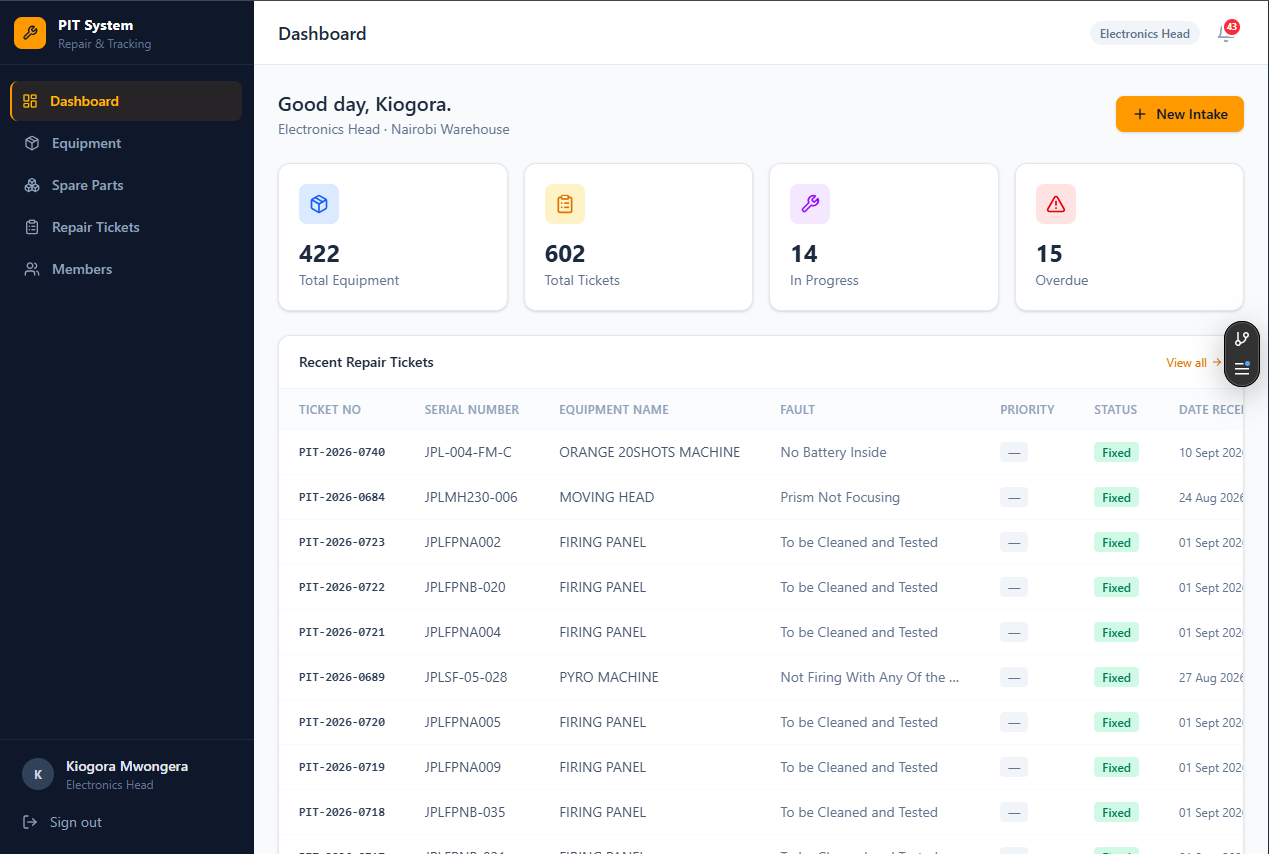
Dashboard
Engineered for Precision, Built for Flawless Ignition. When live pyrotechnics are on the line, there is zero room for error. A single faulty firing panel, an uncalibrated pyro machine, or a missing power component can turn a show-stopping moment into a critical failure. As the developer of the PIT Equipment Repair & Tracking dashboard, my objective was to create a high-reliability command center tailored specifically for the extreme demands of pyrotechnic maintenance. Managing complex assets from multi-channel firing systems and pyro machines to specialized control panels requires absolute transparency. This portal translates raw maintenance data into immediate operational insight:
Real-Time Readiness Tracking: Effortlessly monitor over 400 specialized pyrotechnic assets, ensuring that 95%+ of equipment remains fully operational and show-ready.
Rapid Fault Resolution: Streamline intake and lifecycle tracking for every repair ticket whether troubleshooting communication faults, cleaning firing circuitry, or replacing components to eliminate backlogs.
Proactive Asset Management: Complete visibility into pending jobs, overdue tickets, and spare parts inventory ensures technicians can diagnose, repair, and deploy gear before the next production curtain rises.
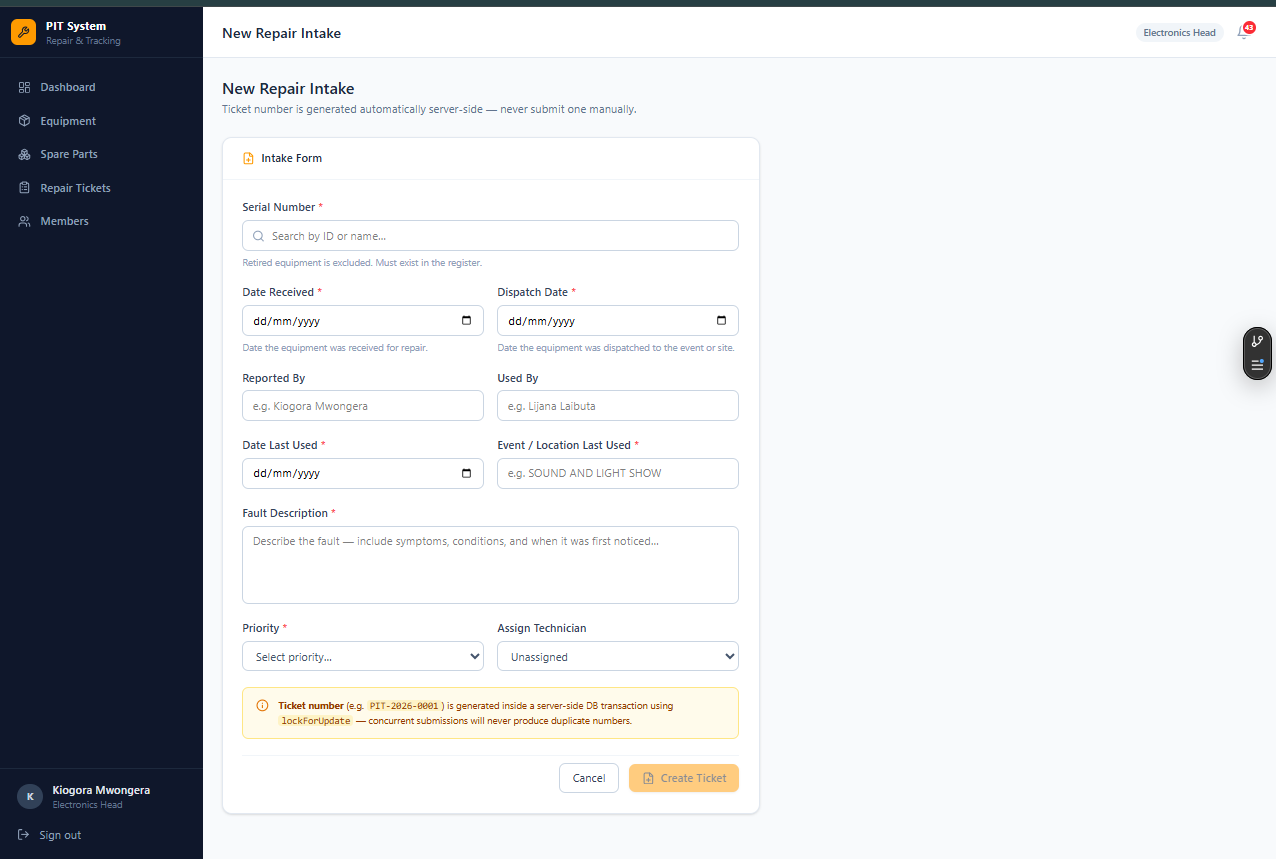
New Repair Intake
Built for Speed. Engineered for Show-Critical Reliability. When gear comes off the stage damaged, time is the ultimate constraint. A single delayed repair or overlooked fault can halt an entire production. As the developer of the New Repair Intake workflow, my priority was to design a seamless, race-condition-proof entry point for high-stakes pyrotechnic equipment. This page is built to capture critical diagnostics at the moment of failure so technical teams can act immediately.
Fail-Safe Integrity: Automated, server-side ticket generation locks in accurate record-keeping instantly—preventing duplicate entries even during high-volume event teardowns.
Full Context Logging: From tracking event locations to pinning down specific fault symptoms and priority levels, every detail is captured up-front to eliminate back-and-forth friction.
Rapid Dispatch Readiness: Designed for high efficiency, turning complex intake data into immediate assignment for technicians—ensuring gear gets fixed and re-certified before the next curtain call.
We don't just log tickets—we accelerate the path from faulty gear back to a flawless ignition.
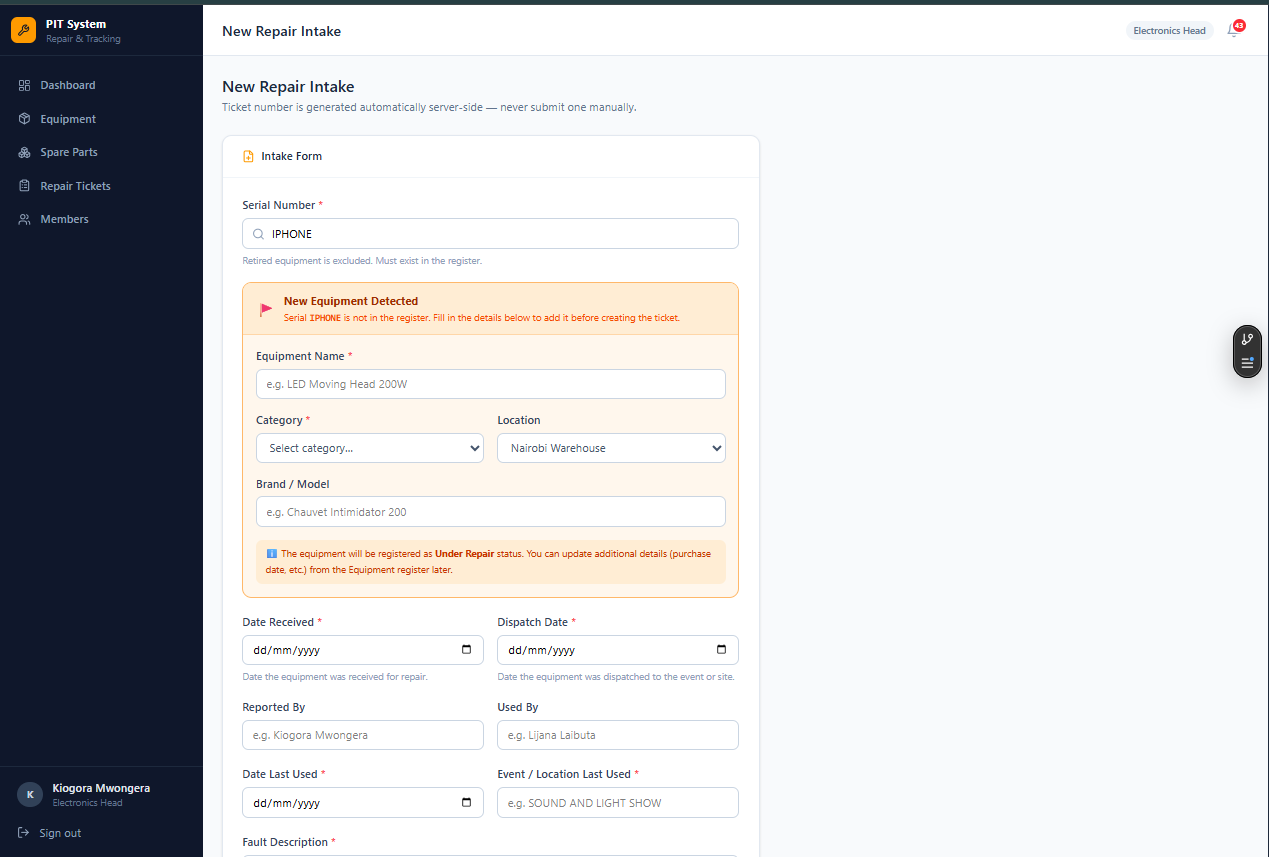
New Equipment Detected
Engineered for Speed. Driven by Intelligent Automation. In the fast-paced environment of live event production, tracking down hardware or manually populating repetitive forms shouldn't slow down critical maintenance. As the developer of this intake interface, my focus was to build an intelligent, context-aware workflow that adapts instantly to whatever gear comes across the bench:
Dynamic Asset Detection: The moment a serial number is entered, the system instantly cross-references the register. If new or unlisted hardware arrives, it dynamically adapts—expanding the intake workflow in real time to capture essential equipment details without breaking the technician's stride.
Instant Category & Location Context: Specialized gear—from pyro controllers, flame machines, and CO2 jets to light controllers and power distributors—can be mapped instantly to its exact warehouse origin and operational status.
Concurrency-Safe Precision: Backend transaction locks handle high-volume event teardowns seamlessly, auto-generating unique ticket IDs without collision risks.
We built this page so technicians spend less time wrestling with data entry, and more time getting stage gear back into operational readiness.
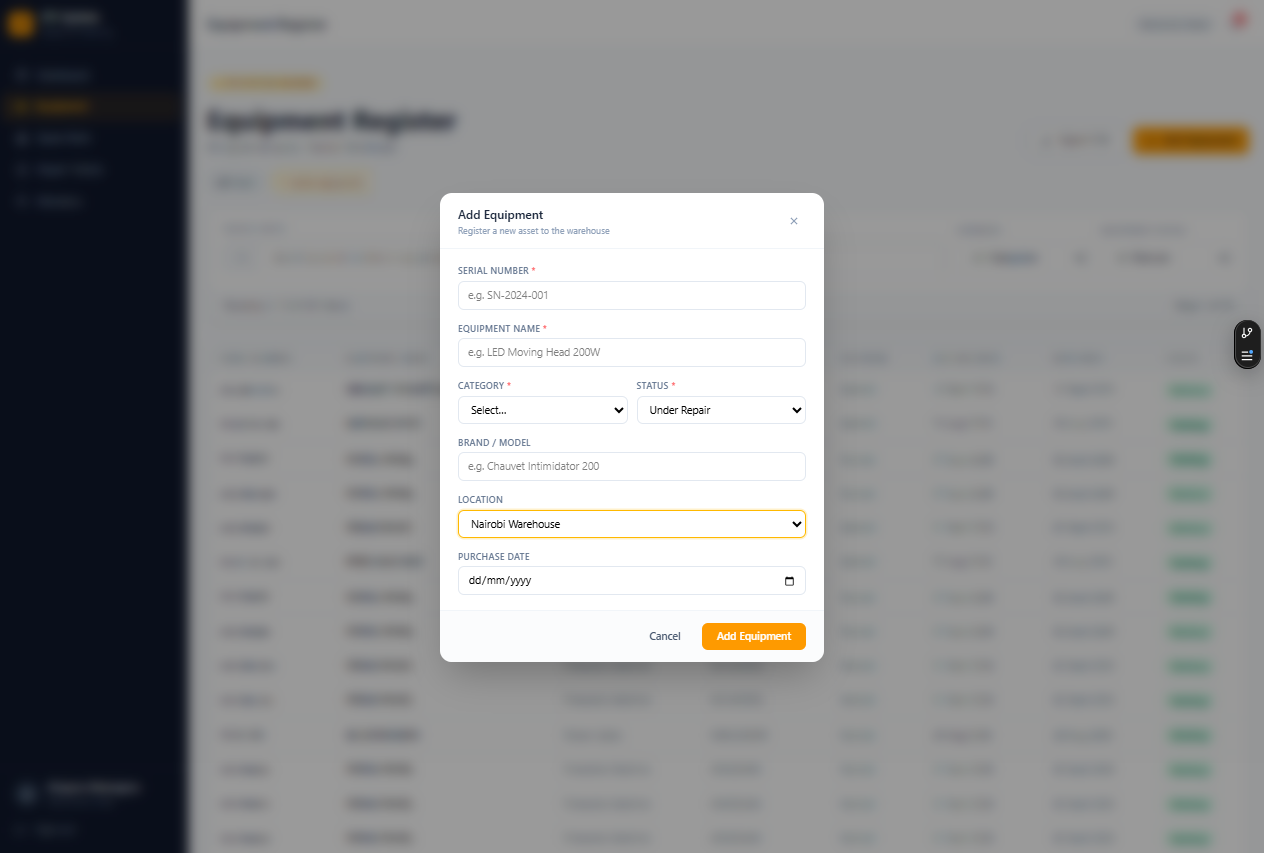
Add Equipment
Engineered for Asset Control. Built for Seamless Fleet Expansion. Every pyrotechnic setup relies on precision hardware working in harmony. Before gear can hit the bench for repair or deploy to the main stage, it requires a definitive digital identity to ensure full accountability across its entire lifecycle. As the developer of the Add Equipment modal within the Equipment Register, my goal was to build a streamlined, fail-safe entry portal for incoming inventory across warehouse network locations:
Instant Digital Onboarding: Effortlessly index new hardware from firing panels and pyro machines to specialized controllers by capturing unique serial numbers, exact brand/model details, and initial operational statuses right at the point of entry.
Multi-Warehouse Traceability: Assign equipment directly to specific hubs such as the Nairobi Warehouse, Mombasa, or regional facilities—establishing immediate location context for inventory leads and field technicians.
Proactive Status Initialization: Define baseline operational readiness upfront whether flagging incoming units as Working, tagging assets as Faulty, or marking legacy hardware as Retired ensuring incoming items integrate cleanly into maintenance queues without manual data cleanup.
We designed this onboarding workflow so inventory teams can register new hardware with speed and precision expanding your technical fleet while keeping every single asset tracked from day one.
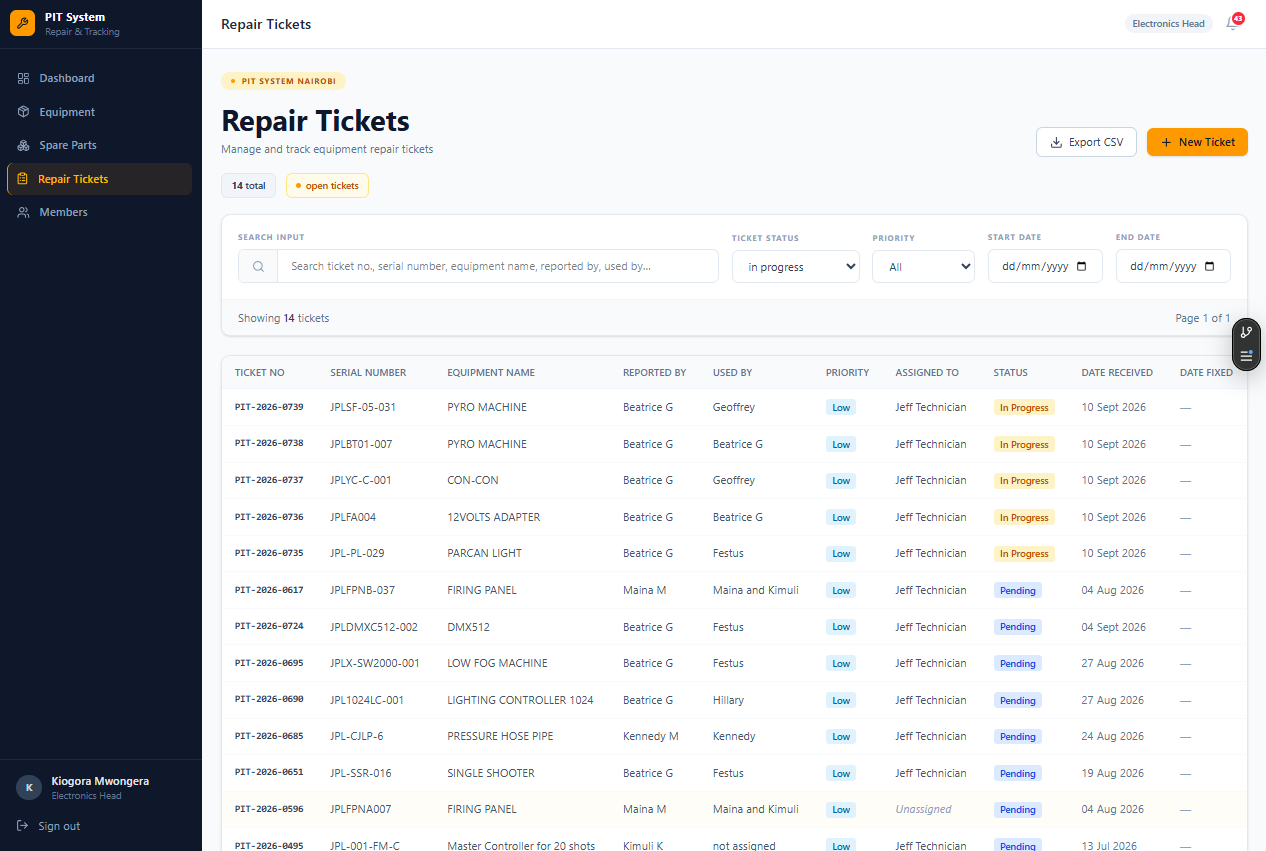
Repair Tickets with Ticket Status Filters
Designed for Control. Built for Precision Operations. When managing live event hardware across rapid turnarounds, clarity is key. Incomplete visibility into active repairs can lead to bottlenecked workflows and show-day surprises. As the developer of the Repair Tickets management view, my priority was to give leads and technicians immediate, unfiltered control over the maintenance queue turning raw ticket volume into an actionable workflow:
Focused Status Filtering: Dedicated status controls let teams filter instantly to high-priority states like isolate gear currently In Progress ensuring active repairs get immediate technician focus while keeping pending and resolved hardware tracked.
Multi-Dimensional Querying: Seamlessly cross-reference by priority levels, specific date windows, equipment names, serial numbers, and assigned personnel to pinpoint exact hardware status in seconds.
Comprehensive Lifecycle Tracking: From pyro machines and firing panels to DMX controllers and low fog systems, every ticket logs complete accountability who reported the issue, who operated the unit, who is repairing it, and its target completion timeline.
We built this grid to eliminate guesswork, empowering technical teams to track every active job seamlessly from intake to show readiness.
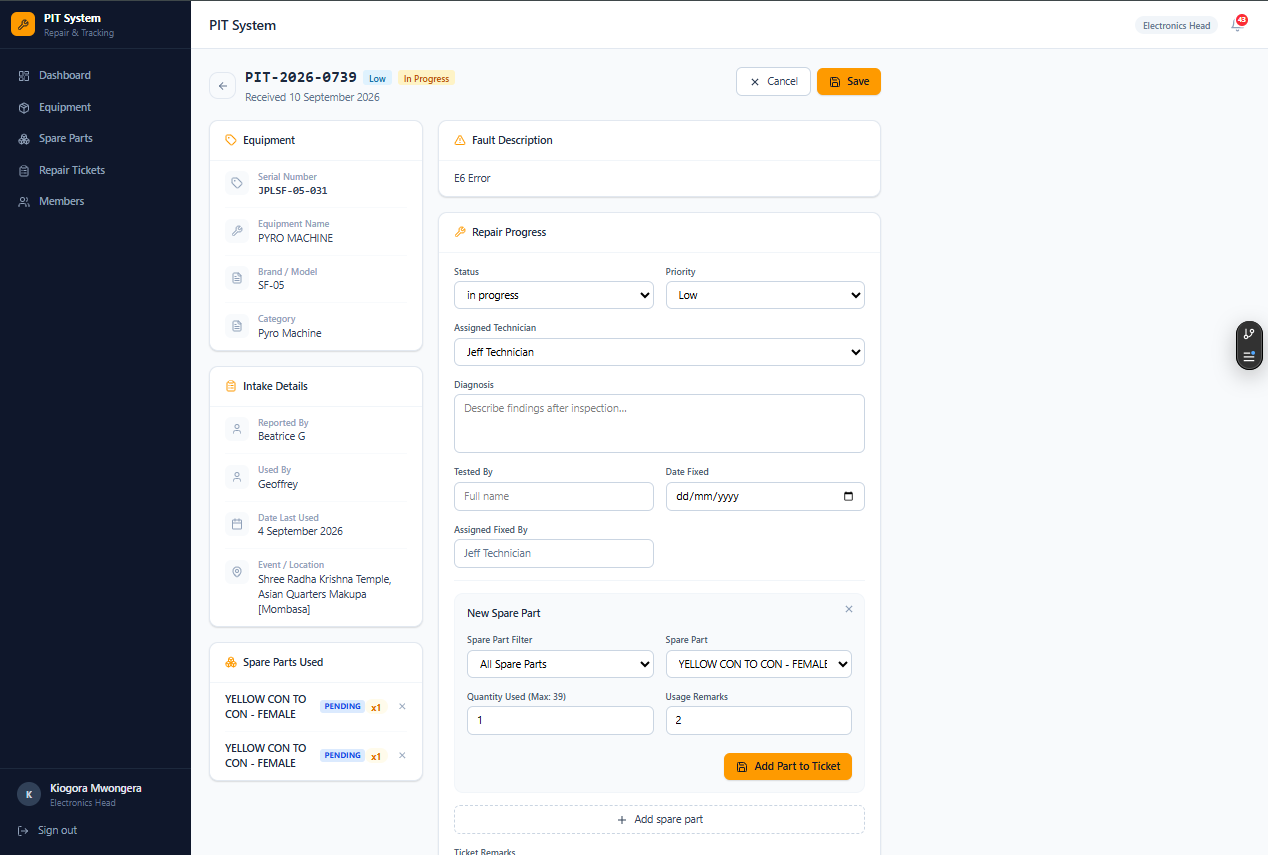
Assest Repairs Which Require Multiple Spare Parts in an Unlimited Amounts
Engineered for Complex Restorations. Built for Stage-Ready Precision. When pyrotechnic equipment suffers multi-component failure under demanding show conditions, standard single-part repair workflows fall short. Restoring complex systems like a Pyro Machine facing critical electronics errors demands complete flexibility and total inventory accountability. As the developer of the ticket detail interface for PIT-2026-0739, my goal was to design a robust workbench capable of handling multi-part, multi-quantity repairs without administrative friction:
Multi-Part Inventory Allocation: Technicians can seamlessly attach multiple distinct replacement components from specialized connectors and wiring assemblies to mainboards and heating coils all within a single active repair ticket.
Granular Quantity Tracking: Full support for batch part allocations allows technicians to specify exact quantities (such as multiple YELLOW CON TO CON - FEMALE connectors) while automatically enforcing real-time stock limits based on warehouse inventory.
End-to-End Accountability: Tracks every allocated component with dedicated status indicators, usage remarks, diagnostic findings, and technician sign-offs to ensure every repaired unit is thoroughly documented before returning to the stage.
We built this interface so technicians can tackle intricate, multi-layered hardware failures quickly and return high-stakes pyrotechnic gear to zero-defect operational readiness.
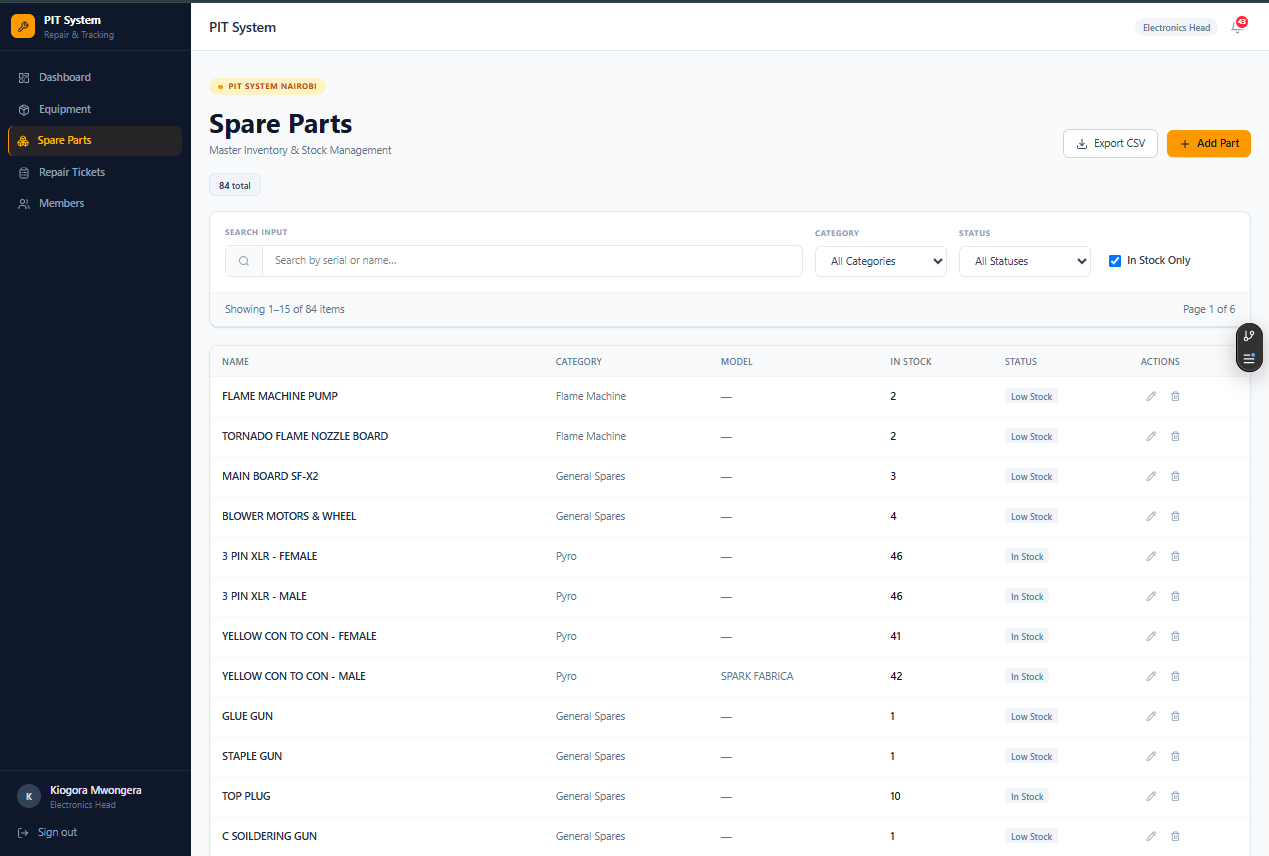
Spare Parts Master Inventory Page
Engineered for Inventory Control. Built for Mission-Critical Availability. In pyrotechnic and live production repair, speed means nothing if the exact component isn't on the shelf when a unit is open on the workbench. Delayed parts mean delayed shows. As the developer of the Spare Parts Master Inventory view, my objective was to create an instant, zero-friction resource manager that gives repair heads and bench technicians total clarity over available stock:
Focused "In Stock Only" Filtering: Toggle instantly to show only available inventory eliminating ghost items and allowing technicians to confirm physical part availability before beginning teardowns.
Real-Time Stock Thresholds: Automatically highlights critical inventory levels from high-demand items like 3 PIN XLR connectors down to low-stock alerts on specialized components like Flame Machine Pumps and Tornado Nozzle Boards to trigger reorders before stockouts occur.
Multi-Category Hardware Cataloging: Seamlessly query across specialized pyrotechnic spares, general electronics, flame machine assemblies, and shop consumables by name, model, or category.
We built this inventory portal so technical teams never waste a second searching for missing components, keeping the repair pipeline moving and the stage fully powered.
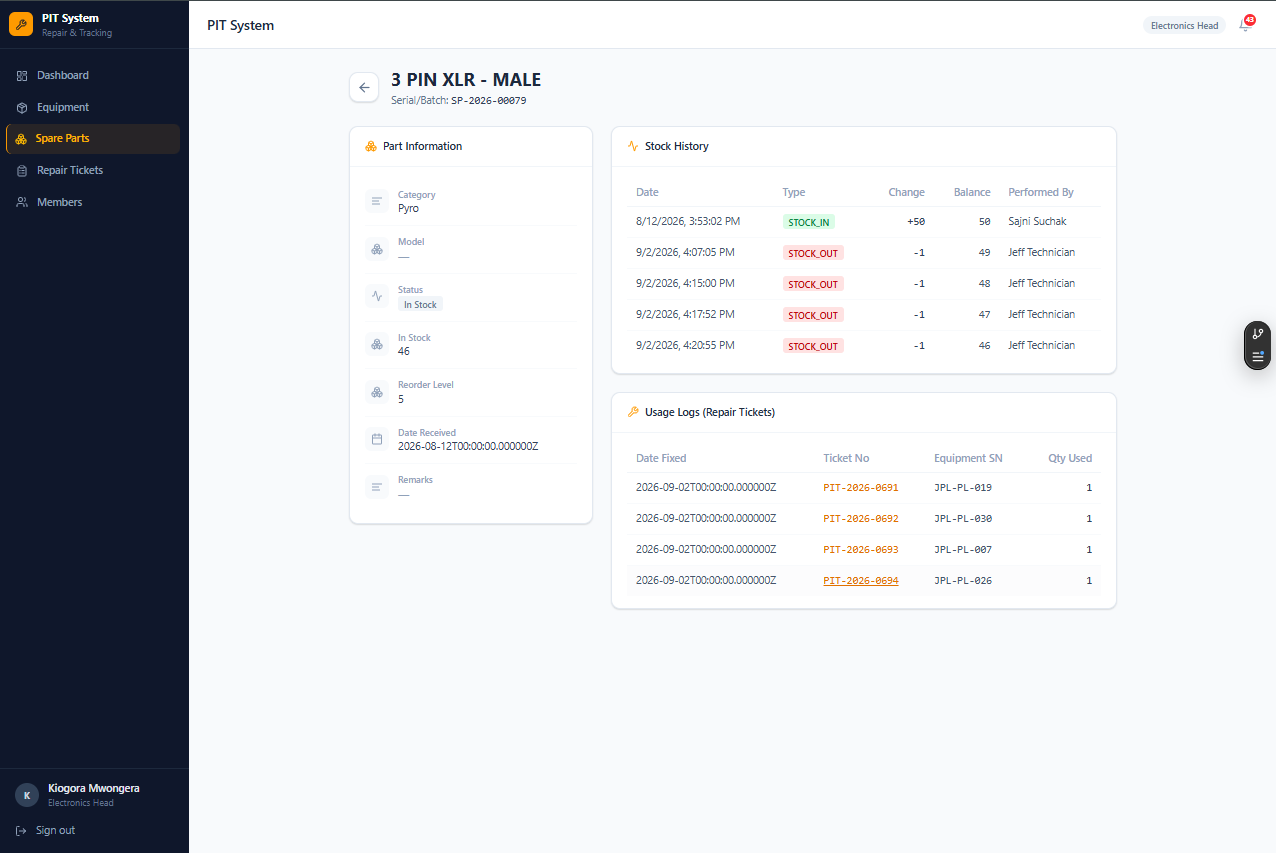
Part Usage and Stock Information Log
Engineered for Traceability. Built for Absolute Component Accountability. In high-stakes pyrotechnics repair, every single component has a story—and tracking that story is what keeps live shows safe and operational. A basic inventory counter isn't enough when high-frequency spares like the 3 PIN XLR - MALE (Batch: SP-2026-00079) power critical signal lines across multiple firing rigs. As the developer of this detail view, my objective was to create an end-to-end audit trail that connects physical inventory directly to bench operations:
Comprehensive Part Information: Gives technicians instant clarity on current stock levels (46 units in stock), automated reorder thresholds (set at 5 units), category tagging, and intake receiving dates—ensuring critical hardware never silently depletes.
Granular Stock History: Provides complete transactional transparency. Every stock intake (like the initial 50-unit batch logged by Sajni Suchak) and subsequent technician checkout (logged live by Jeff Technician) is recorded with exact timestamps and running balance adjustments.
Direct Usage Logging: Bridges the gap between inventory and job execution. Automatically maps every consumed component directly to its corresponding repair ticket (such as PIT-2026-0691) and specific equipment serial number (JPL-PL-019), answering exactly where, when, and on what unit each part was deployed.
We built this page so repair leads and technicians never have to guess where a part went—giving you total visibility from the inventory shelf to the final stage cue.
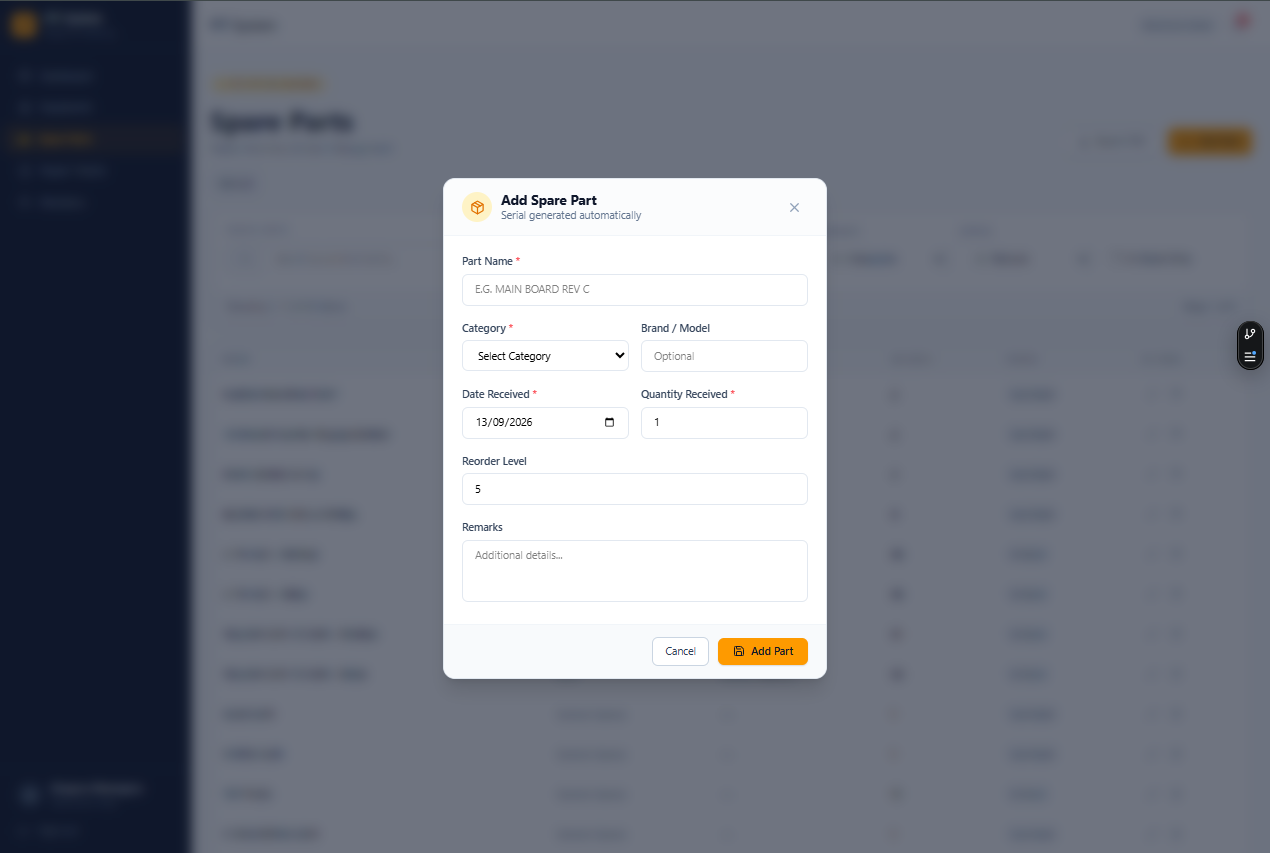
Add Spare Part To Inventory
Engineered for Inventory Growth. Built for Instant Operational Readiness. In live pyrotechnics and stage production, keeping a workshop fully stocked is the first line of defense against show-stopping equipment failures. When new components arrive at the bench, logging them should be seamless, precise, and immediate. As the developer of the Add Spare Part workflow on the Spare Parts Master Inventory page, my goal was to create a frictionless entry portal that transforms incoming hardware into traceable, stage-ready assets:
Automated Traceability: System-generated unique serial numbers immediately assign digital accountability to incoming inventory from high-demand items like fuses and connectors to specialized flame machine pump assemblies eliminating manual tagging errors.
Proactive Reorder Safeguards: Built-in default reorder thresholds automatically monitor stock levels from the moment a component is logged, ensuring low-stock alerts trigger well before critical parts run dry.
Streamlined Cataloging: Structured inputs capture complete component context including category classification, brand/model specifications, receiving dates, and batch quantities instantly updating master stock numbers across the entire maintenance network.
We built this entry workflow so repair leads and inventory managers can seamlessly onboard critical spares, keeping the workshop equipped, technician workbenches stocked, and production gear ready for ignition.
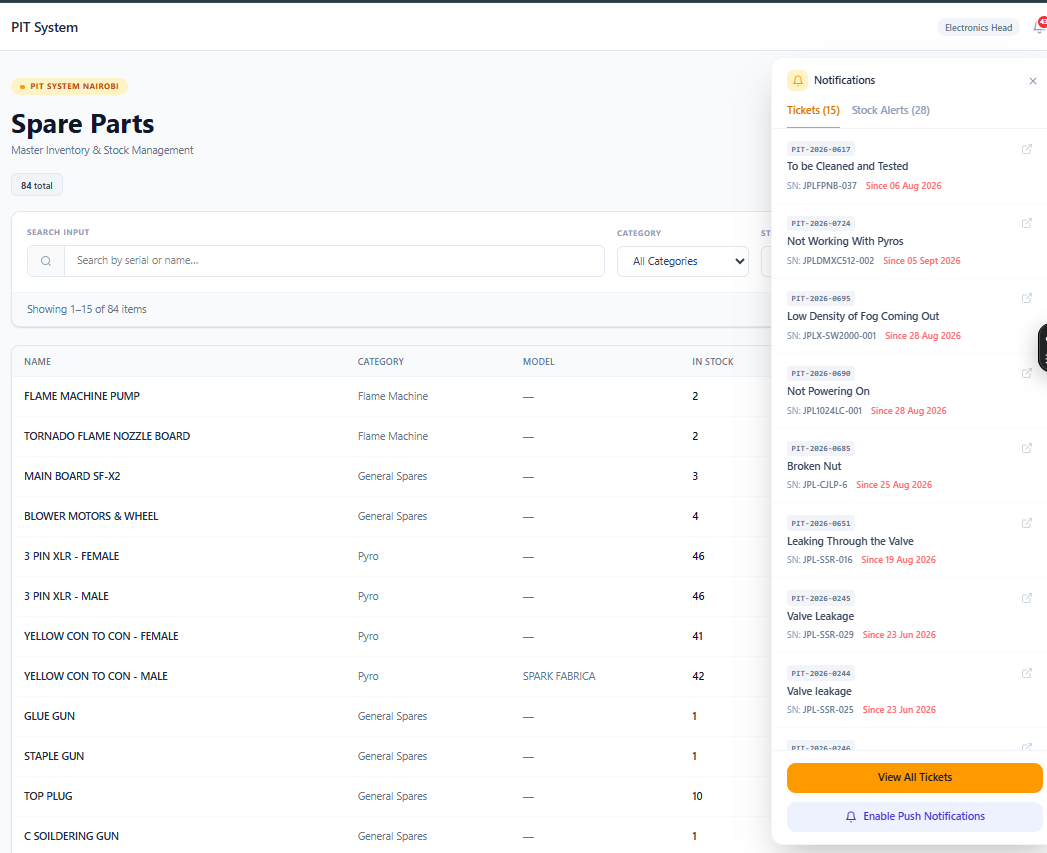
Notification Bar For Overdue Tickets and Depleted Spares
Engineered for Vigilance. Built for Zero Downtime. In the unforgiving environment of live event production, it is rarely the catastrophic failure that derails a show it is the forgotten detail. An aging repair ticket buried in a backlog or a critical spare part quietly slipping out of stock can quickly turn a minor maintenance task into a show-stopping crisis. As the developer of the system's Notification Center, my objective was to build an unignorable, real-time pulse for operational health. I designed this interface to actively hunt down maintenance risks and bring them front and center, ensuring that nothing slips through the cracks:
Proactive Ticket Surfacing: The Tickets alert system is built to prevent backlogs. By instantly surfacing unresolved or aging tasks whether it's a lingering valve leakage on JPL-SSR-029 or a critical signal problem technicians are constantly aware of what needs immediate attention to get gear back on stage.
Instant Stock Level Warnings: With dedicated tracking for depleted inventory, the system actively monitors and alerts the team to low-stock components. It transforms passive inventory data into an active defense mechanism, triggering reorders before the bench runs dry.
Frictionless Actionability: Built directly into the global navigation, this dropdown doesn't just inform; it connects. It provides leads and technicians with immediate, one-click pathways from a high-level warning directly to the specific ticket or part, eliminating administrative delays.
We didn't just build a notification bell we engineered an automated safety net, empowering technical teams to resolve vulnerabilities long before the curtain ever rises.